
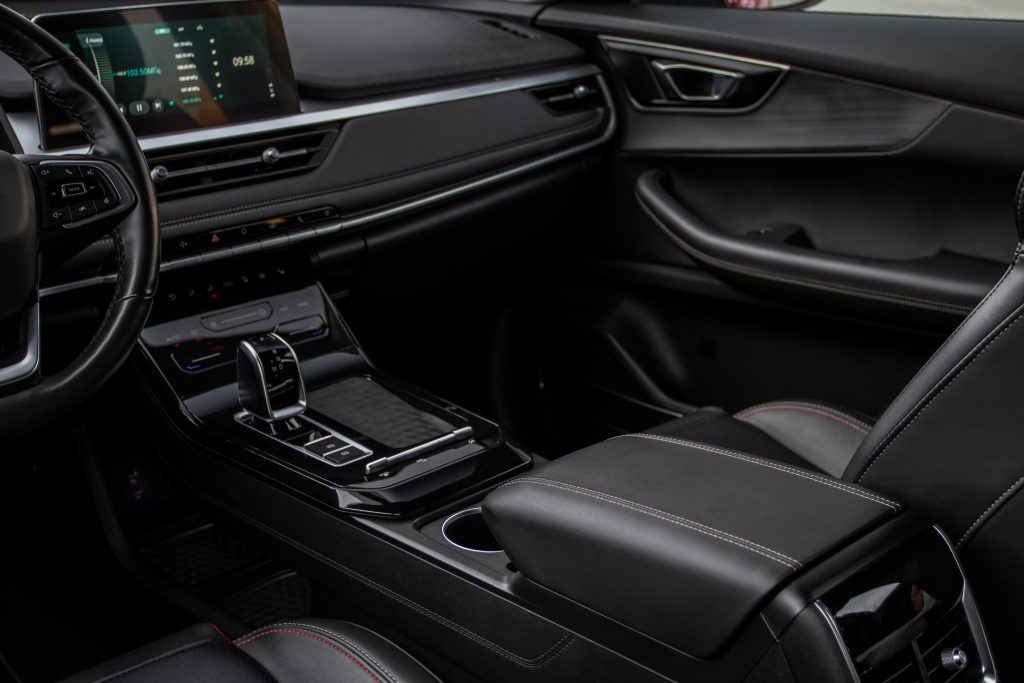
Interacting with a modern car console often requires inputs on smooth surfaces such as touchscreens. They’re less intuitive and ergonomic than haptic controls that provide touch feedback.
According to the Virginia Tech Transportation Institute, nearly 97% of modern vehicles have a touchscreen. Adjusting them requires looking away from the road for five seconds or more, increasing the likelihood of a crash.
That’s part of why IDTechEX expects the automotive haptics market to be worth nearly $2.5 billion by 2035. They require only touch to adjust and allow for a safer and more ergonomic driving experience.
Replacing a car console isn’t overly complex. You can switch out the padded lid or the entire floor assembly.
Replacing it with engineered manufactured parts can provide a better experience than traditional ones, especially those that include haptic feedback.
Not every vehicle has a traditional car console.
You may not see one or find a modified version when looking at certain models of:
This doesn’t mean that the possibility of haptic feedback integration is gone. Parts can be removed and replaced, leaving endless possibilities.
Haptics refers to physical vibrations that you can feel when you press a screen or button. It may also include force feedback in the form of resistance when pressing.
Car dashboards may click or slightly resist your finger, simulating feedback on a flat surface. Capacitive touch trim uses haptics instead of a physical button.
Haptics allow for more design flexibility. It also enables more comfortable, ergonomic cabin design.
It gives the user a better experience. They don’t have to constantly look for the button or switch they need to press because they can feel it. This also leads to driver distraction reduction.
Haptic design integration can be difficult to start. Keeping the buttons small but durable is a challenge that designers need to overcome.
The most important thing is to place the haptic technology where the drivers will use it. They need to be useful but not distracting. It’s also important to use force sensors to eliminate unintended presses.
Shytech surfaces are a powerful advancement in smart surface technology that helps solve these problems. They only appear when needed and can be placed in hidden areas, such as the trim of a car console.
They include several features to provide haptic feedback, including:
The traditional car console can be an overwhelming mess of buttons and switches that creates safety risks and doesn’t leave room for ergonomic design. Integrating haptic feedback creates a subtle but more user-friendly solution.
Mayco International is a Tier-1 automotive supplier. Our team focuses on innovation and improvement in every step of the design process. Quality and sustainability are our top priorities, and we’re always looking to give back to our local communities.
Contact us to start working toward your goals, whether you’re beginning with a sketch or a full CAD model.