
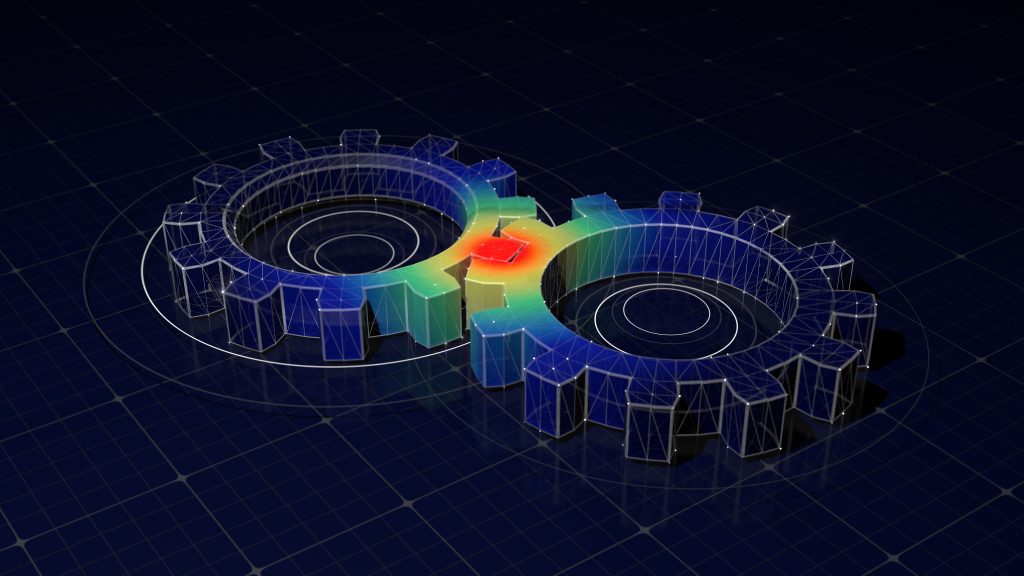
Many structural defects remain hidden until physical testing or production, unless you use CAE simulation early. CAE simulation helps you catch weak weld lines, warpage, hidden voids, fastener fatigue, and assembly stress before they become costly tooling changes.
Fortune Business Insights reports that the global computer-aided engineering sector, valued at roughly $11.12 billion in 2026, is expected to reach $25.52 billion by 2034, reflecting a CAGR of 10.90%. That growth reflects rising demand for digital tools that improve product quality and development efficiency. Every defect you catch on screen is one your tooling budget never has to pay for.
What Is CAE Simulation?
CAE simulation predicts how a component will perform before production starts. It evaluates strength, durability, and manufacturing behaviors without relying on physical prototypes.
Virtual prototyping helps you refine designs earlier and trust your part before tooling is finalized. At Mayco International, this level of validation is built into every program we engineer.
What Structural Defects Get Missed Without CAE Simulation?
Skipping CAE simulation can lead to costly tooling rework, production delays, and field failures long after the part ships. Here are the defects that go unnoticed until it’s too late.
1. Hidden Warpage
A component can leave the mold with dimensional changes that weren’t visible during design. Injection molding warpage simulation predicts these changes before tooling is built, helping you optimize:
- Wall thickness
- Rib layout
- Gate placement
These adjustments improve dimensional accuracy and reduce assembly problems.
2. Stress Concentrations
High-stress regions often form around features that see repeated loading, staying hidden until the part is in service. Structural analysis identifies these weak points so you can improve:
- Corner radii
- Mounting bosses
- Rib transitions
- Load distribution
These refinements strengthen the design and improve long-term durability. They also reduce the risk of fatigue-related failures.
3. Weak Weld Lines
Weld lines form when separate resin flow fronts meet during injection molding, often reducing strength without affecting appearance. Mold flow analysis predicts where they form and supports better decisions for gate location, flow direction, and fill balance. These improvements produce stronger, more consistent molded parts.
4. Insufficient Stiffness
A component that flexes too much can affect fit, function, and durability. Simulation measures how the design responds to expected loads, helping you optimize during automotive door trim engineering:
- Rib placement
- Wall thickness
- Material selection
- Support features
These changes improve stiffness without adding unnecessary weight.
5. Localized Material Failure
Vibration, repeated use, and temperature shifts can weaken areas that appear sound during design. Simulation evaluates polymer structural integrity under realistic loads by assessing:
- Stress distribution
- Impact resistance
- Deformation limits
The analysis supports targeted design improvements that reduce costly revisions.
Make CAE Simulation Part of Your Design Process Today
The defects covered here rarely announce themselves until tooling is cut. CAE simulation catches them while they’re still a design tweak, not a budget overrun. Incorporate it now to ensure your next part is correct the first time.
At Mayco International, we’re a Tier-1 automotive supplier with facilities across Michigan, Indiana, Ohio, and Mexico. We deliver full-service solutions, from pre-concept design and engineering validation to tooling, manufacturing, and assembly.
Our innovations like BioForm, BioJect, and Structural Injection Compression create lighter, stronger, more sustainable components. Contact us today to optimize your design with CAE simulation before physical prototyping begins